Case study — brand strategy & storytelling
Finding the story that was already there.
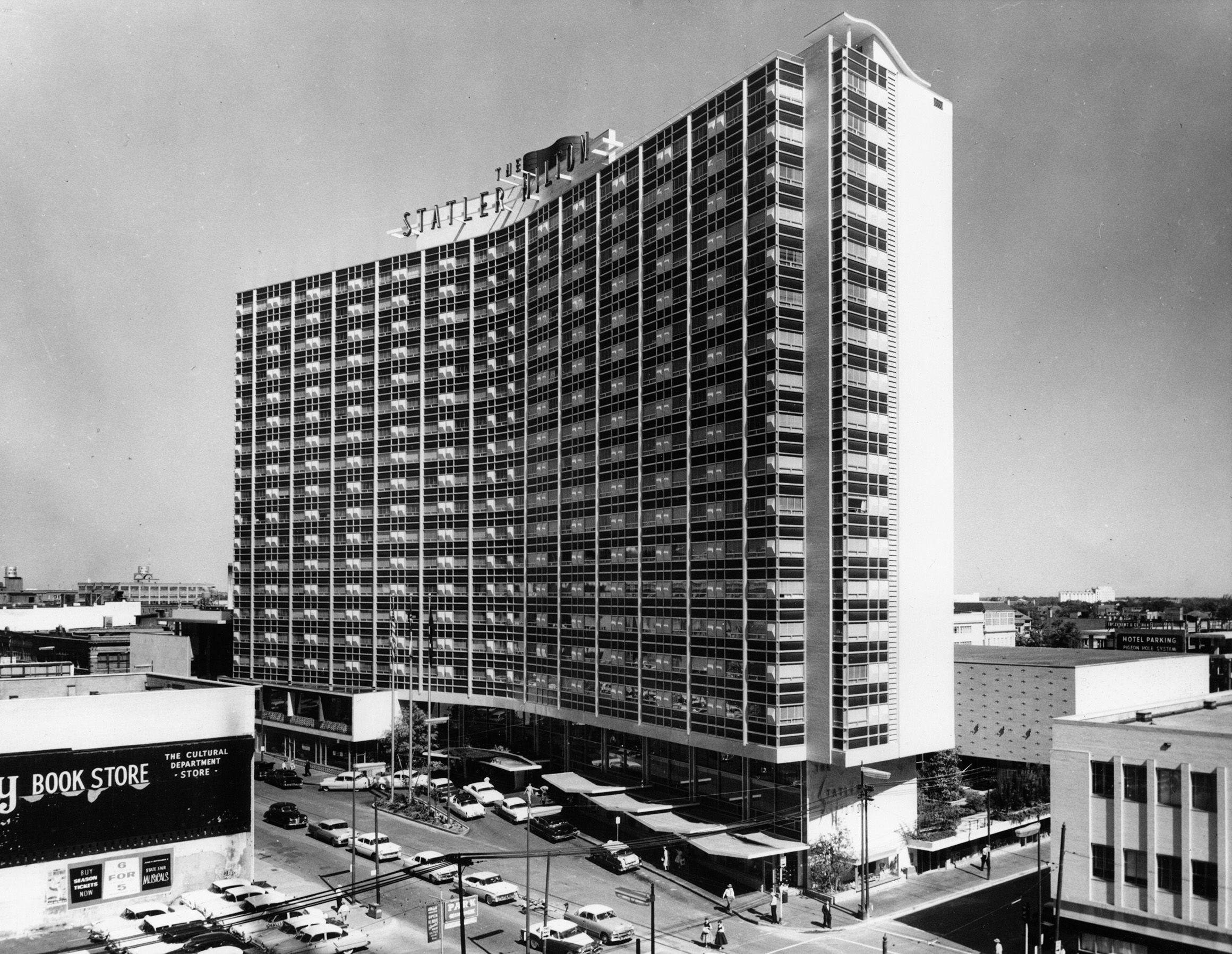
The Statler had spent decades being remembered for what it used to be. The opportunity was to uncover enough of its history to help define what it could become next.
Role
Brand strategy, creative direction, video production
Timeline
2014–2020 — from before groundbreaking to a year past opening
Worked with
Developer, architects, leasing teams, construction, and PR agency
Outcome
Research that shaped the identity, the discovery of a lost sculpture, and hours of video content
A building remembered backwards
When I became involved in 2014, the redevelopment was still an idea. The project hadn't broken ground, and the challenge was interesting: how do you create a new identity for a property whose value is inseparable from its past?
The building had once been one of the most ambitious hotels in the Southwest. But decades of decline had changed how people thought about both The Statler and the part of downtown Dallas around it. There were competing ideas about what it should become, how much of its history to embrace, and how a mid-century landmark fits into a contemporary hospitality project.
I became convinced the answer was not to minimize the history. It was to understand it better and leverage it for the rebirth of the building.
Digging for the real story
I began researching the history far beyond what we needed for conventional marketing materials — and the surplus is what ended up mattering.
Archives
Visited the Hilton archives in Houston.
Ephemera
Collected promotional materials and news footage.
Early years
Found and interviewed people from the hotel's first era.
The research uncovered a far richer property than the one in public memory: a rooftop heliport, where an early promotional flight involving Lucille Ball and Desi Arnaz became part of an experiment in downtown transportation that proved far less practical than anyone hoped. The acts that played the Empire Room Supper Club. Elaborate Neiman Marcus events. Architectural details, artwork and promotional material that had largely disappeared.
Those discoveries began to affect more than the marketing.
When research changes the project
Original photographs and articles included a sculpture known as the Wishing Star, commissioned by Conrad Hilton for the hotel. It was more than just art — it was part of the hotel's identity, and sketches of it appeared on marketing materials. After the building changed hands, the sculpture disappeared and was believed to have been sold for scrap.
- 01Commissioned Created during Conrad Hilton's ownership of the hotel
- 02Disappeared Vanished after a sale, believed sold for scrap
- 03Found Employee interviews revealed it had survived — in a backyard
- 04Restored Returned to the property in a six-figure preservation effort
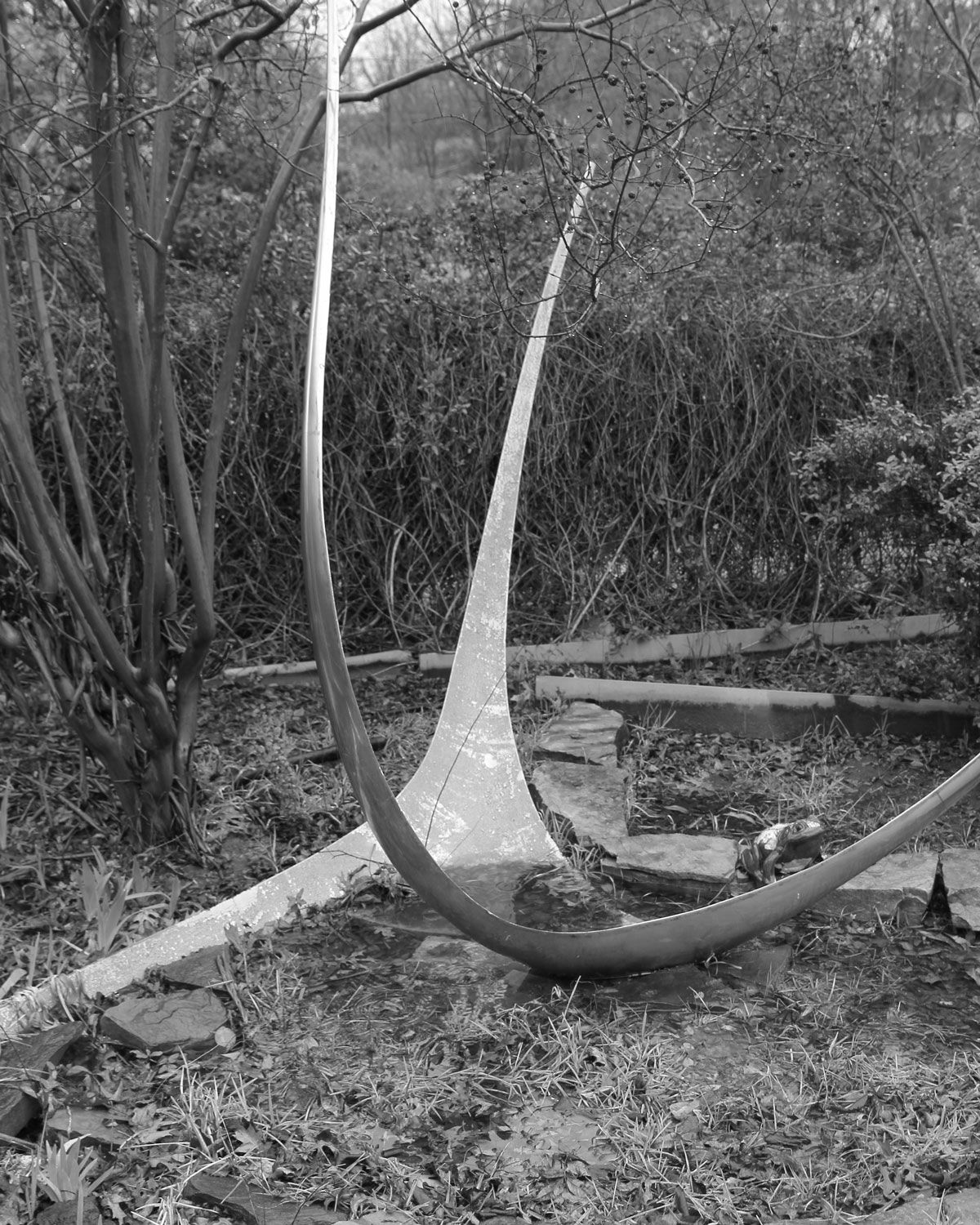
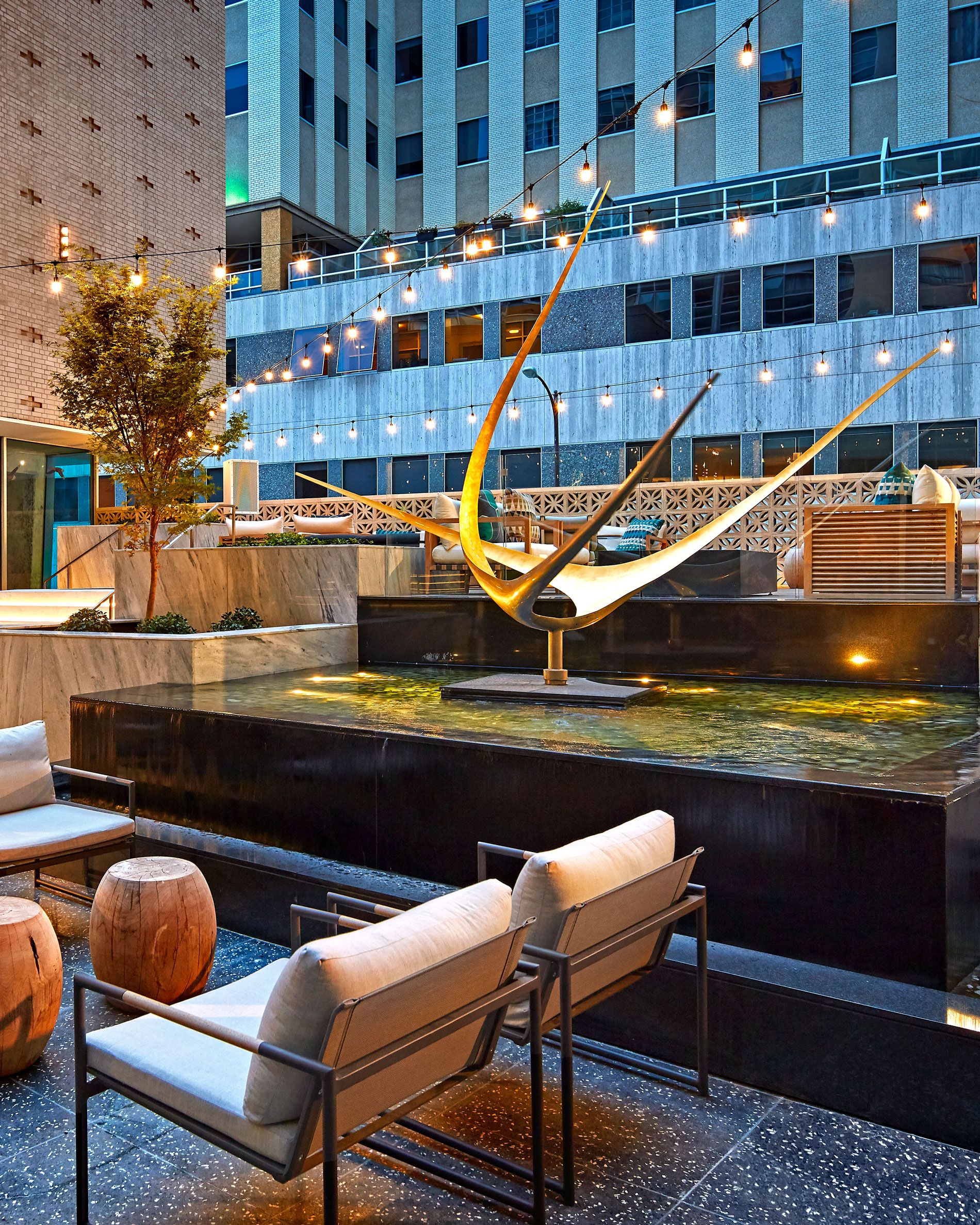
The archival material also revealed something no one on the redevelopment team knew at the time: the Wishing Star had originally rotated as part of a water feature. That evidence informed the restoration, and it runs today as a functioning rotating water feature.
Its monetary value is almost beside the point. The value was recovering a piece of the building's story that otherwise could have been lost.
Giving the history a visual identity
The property had never really possessed a standalone visual identity independent of its hotel operator, so our team explored several directions for a new logo. I selected the finalists presented to the development team and recommended the concept I believed best connected the building's history with its new life.
There were other opinions in the room, including support for a different direction. I made the strategic case for the design I believed was right, and the developer ultimately selected it. What began as a logo became a far more prominent element throughout the completed property than had originally been contemplated.

Reopening a landmark
The research continued to influence the project all the way through opening. I discovered archival coverage of Conrad Hilton's original multi-day opening celebration — and when it came time to reintroduce The Statler to Dallas, we used that history as the model for another multi-day grand opening decades later.
From the earliest planning through more than a year after opening, my team created video, photography, social content, events and marketing materials, while the archive we assembled became a recurring source for press coverage and storytelling.
What the archive became
A planned feature-length documentary was ultimately not completed because of funding. But the research, interviews, footage and archival material created for it became something more useful: a library of stories that supported the project for years.
Sometimes the most valuable strategic insight isn't something you invent. It's something you uncover by asking one more question.
What I took from it
A small part in recovering a piece of Dallas history
The Statler reinforced something that has shaped how I approach projects ever since. Research isn't a phase you complete before the real work starts — done properly, it keeps changing what the real work is.